
Russia To Ban Gasoline Exports From April 1 To Prioritise Domestic Supply
Russia To Ban Gasoline Exports From April 1 To Prioritise Domestic Supply
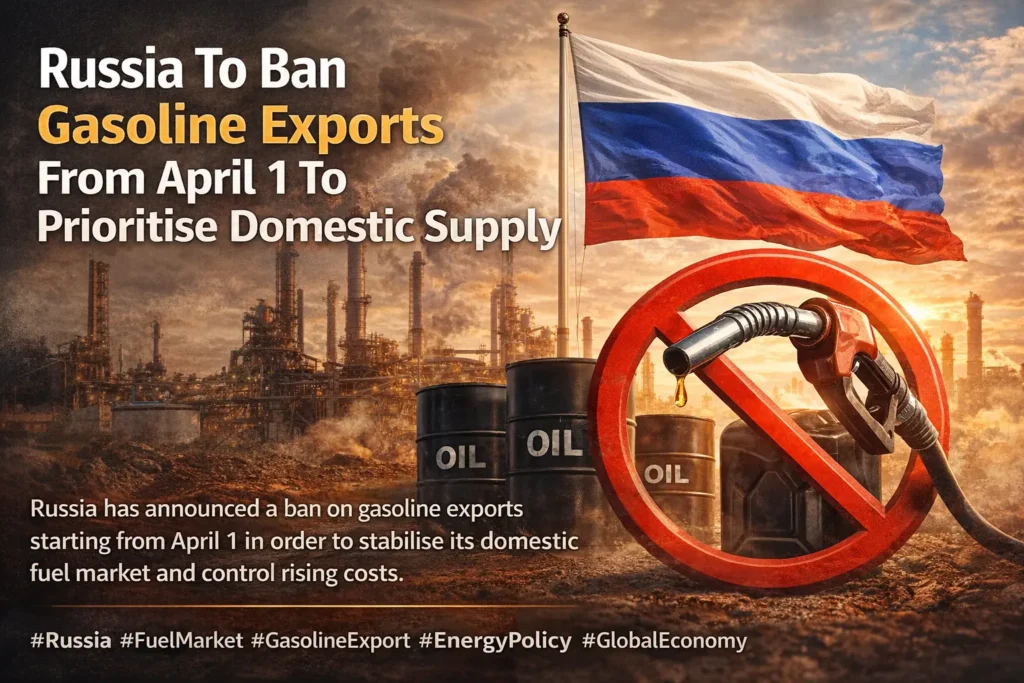
- In a significant move aimed at stabilising its internal fuel market, Russia has announced a ban on gasoline exports starting from April 1. The decision comes as part of the government’s strategy to ensure sufficient domestic supply and to control rising fuel prices within the country.
- This step reflects growing concerns over fuel shortages and price volatility, which have been affecting not only local consumers but also various industries dependent on fuel. By restricting exports, the government aims to redirect supply toward domestic needs, ensuring that citizens and businesses are not burdened by escalating costs.
- Over the past few months, Russia has witnessed fluctuations in fuel production and distribution, partly due to maintenance work at refineries and geopolitical factors impacting the global energy market. These challenges have led to a tighter supply scenario, making it necessary for authorities to intervene. The export ban is expected to temporarily ease pressure on the domestic market by increasing availability and potentially stabilising prices.
- However, this decision is likely to have broader implications on the global fuel market. As one of the world’s major energy exporters, Russia plays a crucial role in supplying gasoline and other petroleum products to several countries. A sudden halt in exports could lead to supply gaps in international markets, possibly pushing fuel prices upward in regions dependent on Russian exports.
- Countries that rely heavily on imported fuel may need to explore alternative suppliers or adjust their energy strategies to mitigate the impact. This could also result in increased competition among importing nations, further influencing global price dynamics. Energy analysts suggest that such policy decisions highlight the interconnected nature of global energy markets, where a domestic move in one country can trigger ripple effects worldwide.
- From a domestic perspective, the ban is expected to benefit Russian consumers in the short term. Increased availability of gasoline within the country may lead to more stable or even reduced prices at fuel stations. Additionally, it can help support local industries, transportation sectors, and agricultural activities that rely heavily on affordable fuel.
- On the other hand, oil companies and exporters within Russia may face revenue challenges due to restricted access to international markets. Export restrictions often limit profit margins, especially when global prices are higher than domestic rates. Balancing the interests of consumers and producers will be a key challenge for policymakers during this period.
- It is important to note that such bans are usually temporary and subject to review based on market conditions. If domestic supply stabilises and production increases, the government may consider lifting or easing the restrictions. Until then, the focus remains on ensuring energy security and protecting the domestic economy from external shocks.
- In conclusion, Russia’s decision to ban gasoline exports from April 1 underscores the importance of prioritising domestic needs during times of uncertainty. While it may provide short-term relief within the country, its global implications cannot be overlooked. The coming weeks will be crucial in determining how this move shapes both domestic stability and international fuel markets.